Threat Analysis, Vulnerability Management and Security Incident Handling For more than 20 years, Zentric has provided flexible and straightforward support for threat analysis, vulnerability management, and the assessment and handling of security incidents, including forensic analysis and coordination of security incidents.
Security Incident?
Products
Software platforms and tools for professional information security
Platform
Redsight ZISO
Integrated ISMS platform with 21+ modules: Risk management, BCM, Privacy, Incident Handling, GRC, Asset Management, Vulnerability Management and more. Built for CISOs according to ISO 27001, NIS2, BSI 200-x.
Threat analysis and risk assessment for products and systems. Structured Threat Modeling methodology with catalog-based threat mapping and automated risk assessment.
Incident Response training platform with real-time dashboard, scenario generator, automated injects, role and task management, and detailed After-Action Reports.
AI-powered analysis of security advisories, CVEs and threat reports. Automatic relevance check for your asset landscape and prioritized recommendations.
Creation and management of CSAF documents (Common Security Advisory Framework) according to OASIS standard. Validation, signing, and automated distribution of Security Advisories.
Import and analysis of Software Bill of Materials (SBOM) in CycloneDX and SPDX format. Automatic matching with CVE databases and vulnerability tracking across the entire software lifecycle.
In case of an IT security incident, you need quick support. Time is a critical factor, and swift action is required. Call us or send a message via bell.
Services
Business Continuity Management
Business Continuity Management (BCM) is a critical aspect of corporate governance that ensures your organization remains operational during times of crisis, natural disasters, or cyberattacks. We support you in building a comprehensive BCM framework that protects your valuable business processes and ensures the continuity of your services.
What is Business Continuity Management?
Business Continuity Management is a holistic approach to ensuring that your organization can maintain or quickly restore its critical business functions when a disruption occurs. This includes identifying critical processes, assessing risks, and developing strategies for risk mitigation and recovery.
Our BCM Services Include:
1. Business Impact Analysis (BIA): We analyze your business processes and their dependencies to identify critical functions and quantify the impact of potential disruptions. This helps you prioritize recovery efforts.
2. Risk Analysis and Assessment: We conduct a comprehensive analysis to identify and assess potential threats to your business continuity. This includes scenarios such as IT failures, natural disasters, cyber threats, supply chain disruptions, and more.
3. Strategy and Planning: Based on our analysis, we develop customized BCM strategies, including Recovery Time Objectives (RTO) and Recovery Point Objectives (RPO), to ensure your organization can respond quickly and effectively.
4. Plan and Documentation Development: We help you create and document detailed Business Continuity and Disaster Recovery plans that keep your organization operational during crisis situations.
5. Training and Awareness: We provide training for your employees to raise awareness about Business Continuity and ensure everyone understands their roles and responsibilities in crisis situations.
6. Testing and Exercises: We conduct regular tests and exercises to verify the effectiveness of your BCM plans and identify improvement opportunities.
Standards and Best Practices:
ISO/IEC 27031: This standard provides guidance for Information and Communications Technology (ICT) readiness for business continuity and includes requirements for IT-based business continuity capabilities.
ISO 22301:2019: This standard sets international requirements for business continuity management systems. It creates a framework for preparing for, responding to, and recovering from business disruptions.
NIST Business Continuity Planning Guide: This guide provides comprehensive guidance for developing and implementing effective BCM programs in organizations.
Why is BCM Important?
In today's interconnected and digital world, business disruptions can have significant financial and reputational consequences. A solid BCM program helps you ensure data security, maintain operational continuity, and respond faster to crises to minimize losses.
Digital Forensics
We offer comprehensive digital forensics services to investigate and analyze security incidents. Our experts use advanced techniques to secure digital evidence that helps you understand the extent of attacks and protect your systems against future attacks.
Incident Handling and Vulnerability Management
We support you in building robust frameworks for Incident Handling and Vulnerability Management. Our approach ensures that your organization can effectively identify, respond to, and mitigate threats to minimize potential damage and downtime.
Incident Response
Threat Identification: We help you to recognize potential threats at an early stage by continuously monitoring your systems and the respective peripherals and checking for vulnerabilities.
Example: Through regular checks of your components for vulnerabilities, the probability increases that these vulnerabilities in your software components are discovered and remedied before attackers can exploit them. Unremedied vulnerabilities are roughly equivalent to a wide-open handbag with a view of the wallet.
Response Strategies: We develop customized response plans (Incident Response Plan) that help your organization to react quickly and efficiently to security incidents.
Example: In the event of a data leak, you have immediate access to a clearly defined plan that includes steps for containment, investigation, and notification of the affected parties. In the event of an incident, there is no time to design or even discuss such plans.
Risk Mitigation: By implementing proven processes and practices, you reduce the probability and mitigate damage to your components in the event of security incidents.
Example: The introduction of two-factor authentication or encryption in the right place can significantly reduce the risk of unauthorized access.
Training and Awareness: We offer training for your employees to raise awareness of security threats, but also to acquire the skills to deal with them practically.
Example: Regular training and exercises on how to deal with attacks reduce the likelihood of an attacker's success.
Incident Analysis and Forensics: In the event of a security incident, we support you with forensic coordination and analysis to determine the cause of the incident and prevent future attacks. This also includes dealing with attackers, authorities, and law firms.
Example: After a cyberattack, our experts analyze the traces of the attack to understand how the attacker penetrated the system and what measures need to be taken to prevent similar incidents in the future.
Standards, Frameworks, and Best Practices: We like to use standards when planning and introducing new processes. The following are suitable for the topics of Incident Response and Vulnerability Handling:
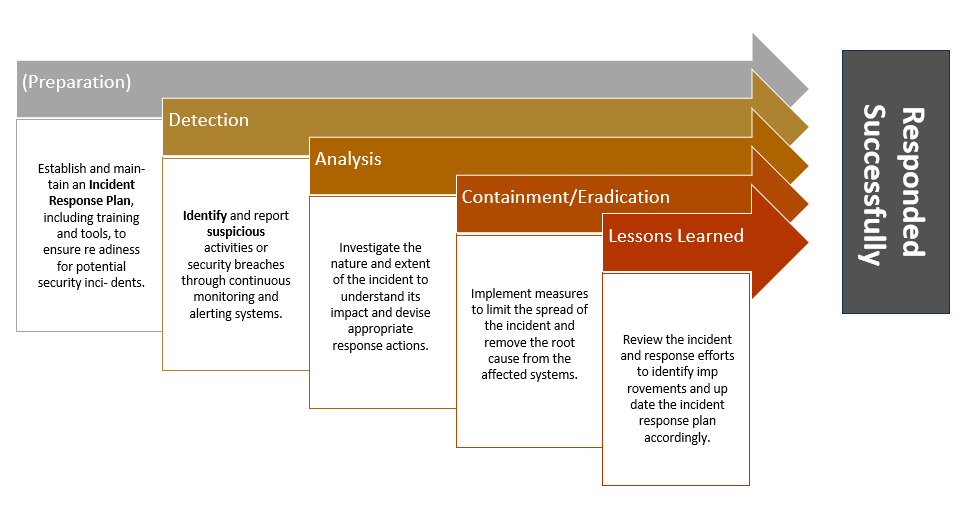
Incident Handling ISO/IEC 27035: This standard provides comprehensive guidance for the management of information security incidents and includes the phases of planning and preparation, detection and reporting, assessment and decision, response, and learning processes. More information can be found on the ISO/IEC 27035 standard website.
NIST Special Publication 800-61: This guide from the National Institute of Standards and Technology (NIST) describes the incident handling process in the USA in detail. It includes the phases of preparation, detection and analysis, containment, eradication, recovery, and post-incident activities. More on the NIST website.
SANS Incident Handler’s Handbook: This handbook provides practical instructions and best practices for incident handling and covers all phases from preparation to post-incident activities. It is a frequently used resource for security professionals worldwide. You can find more here.
FIRST (Forum of Incident Response and Security Teams) Best Practices: FIRST provides global best practices and guidelines for incident response teams and promotes collaboration and information exchange between different teams. You can find more here.
Vulnerability Handling
NIST SP 800-216: This special publication provides recommendations for establishing a federal framework for vulnerability disclosure. It emphasizes the importance of a structured process for accepting, confirming, analyzing, and resolving vulnerability reports. This also includes clear communication channels to minimize or eliminate security gaps. You can find more information here.
ISO/IEC 30111:2019: This standard provides guidelines for handling and resolving reported potential vulnerabilities in products or services. It is aimed at providers who have to deal with vulnerabilities. You can find more details here.
ISO/IEC 29147:2018: This standard focuses on vulnerability disclosure and ensures that information about vulnerabilities is exchanged effectively and securely between the parties involved. You can find more information here.
OWASP Vulnerability Management Guide (VMG): This guide provides comprehensive instructions for setting up an effective vulnerability management program. It covers the entire lifecycle of vulnerability management, including preparation, detection, reporting, and remediation. The guide emphasizes the importance of a continuous process based on risk decisions and helps to ask the right questions and integrate a robust program. You can find more information here.
The OWASP Vulnerability Management Center (VMC) offers comprehensive resources and guidance for managing security vulnerabilities. It covers the entire lifecycle of vulnerability management, including detection, prioritization, remediation, and reporting. The VMC aims to help organizations handle vulnerabilities systematically and efficiently by providing best practices and tools. It is aimed at both technical and non-technical professionals and their managers to ensure a robust security program. You can find more here.
Through these comprehensive services, we ensure that your organization is not only prepared for current threats but also develops a strong security culture in the long term.
Incident Response Dry Run / Drill
Test and improve your response capabilities before an incident occurs.
An Incident Response Dry Run is a controlled simulation of a real cybersecurity incident. The focus is not on technical exploitation of vulnerabilities, but on the evaluation of organizational and procedural response — so your team can act quickly and effectively when it matters.
Scenario Development
We develop realistic attack scenarios based on your organization's specific risks: ransomware, data breaches, insider threats, and more.
Planning and Execution
Detailed exercise planning with timeline, team definition, and predefined injects — controlled and under realistic pressure.
Team Evaluation
We observe and document response speed, decision-making, communication, and coordination across your teams.
Gap Detection
During the drill we identify gaps in processes, missing resources, and unclear responsibilities in your Incident Response Plan.
After-Action Review
Detailed debrief with results analysis, key insights, and prioritized improvement measures for your team.
Report and Recommendations
Comprehensive final report with findings, best practices, and prioritized action recommendations to strengthen your IR capabilities.
Drill Formats: Tabletop Exercise — Discussion-based, no system involvement. Ideal for strategic training and beginners. Partial Drill — Simulation of a specific phase, e.g. Detection & Containment only. Full-Scale Exercise — Complete simulation of all teams and systems. Maximum realism.
Why are IR Dry Runs important?
Gap Identification — Expose weaknesses in your plan before a real incident occurs
Team Preparation — Build confidence and capability under realistic pressure
Process Improvement — Optimize workflows, communication paths, and escalation routes
Compliance — Meet regulatory requirements (NIS2, DORA, ISO 27035)
Faster Response — Practiced teams respond measurably faster to real incidents
Relevant Standards: NIST SP 800-61 Rev. 2 — Recommends regular exercises and testing of the Incident Response Plan. ISO/IEC 27035 — Requires regular review and testing of Incident Response processes. NIST Cybersecurity Framework — The "Respond" function mandates continuous review of response processes. SANS Incident Handler's Handbook — Practical best practices for all phases from preparation to post-incident.
DevSecOps & Secure CI/CD Pipeline
Release faster while enforcing measurable security controls in every delivery step.
We integrate security directly into your engineering workflows so that pull requests, builds, and deployments follow clear security gates, governance rules, and operational playbooks.
Pipeline Assessment
Review of workflows, permissions, artifact flow, and secret handling across CI/CD platforms.
Shift-Left Security
SAST, SCA, secret scanning, IaC checks, and container image scanning in PR and build stages.
Policy-as-Code
Automated guardrails with OPA/Conftest to block non-compliant changes before production.
Policies & SOPs
Provisioning and tailoring of security policies and SOPs for release, incident, and vulnerability workflows.
Supply Chain Security
SBOM generation, artifact signing, and provenance checks for trustworthy software delivery.
AI/LLM Evaluation
Security and governance assessment of AI/LLM methods and components used in SDLC and operations.
Service Summary: Target: secure, fast, and audit-ready software delivery. Deliverables: technical gates, adapted policies/SOPs, and a prioritized remediation roadmap. Business Value: lower production risk, faster response, and stronger compliance evidence.
Relevant Standards: NIST SSDF (SP 800-218) for secure software development practices. SLSA for provenance and supply-chain integrity. ISO/IEC 27001/27002 for ISMS-aligned controls and governance. NIS2 / DORA for resilience and regulatory readiness.
Cyber Security Risk Management
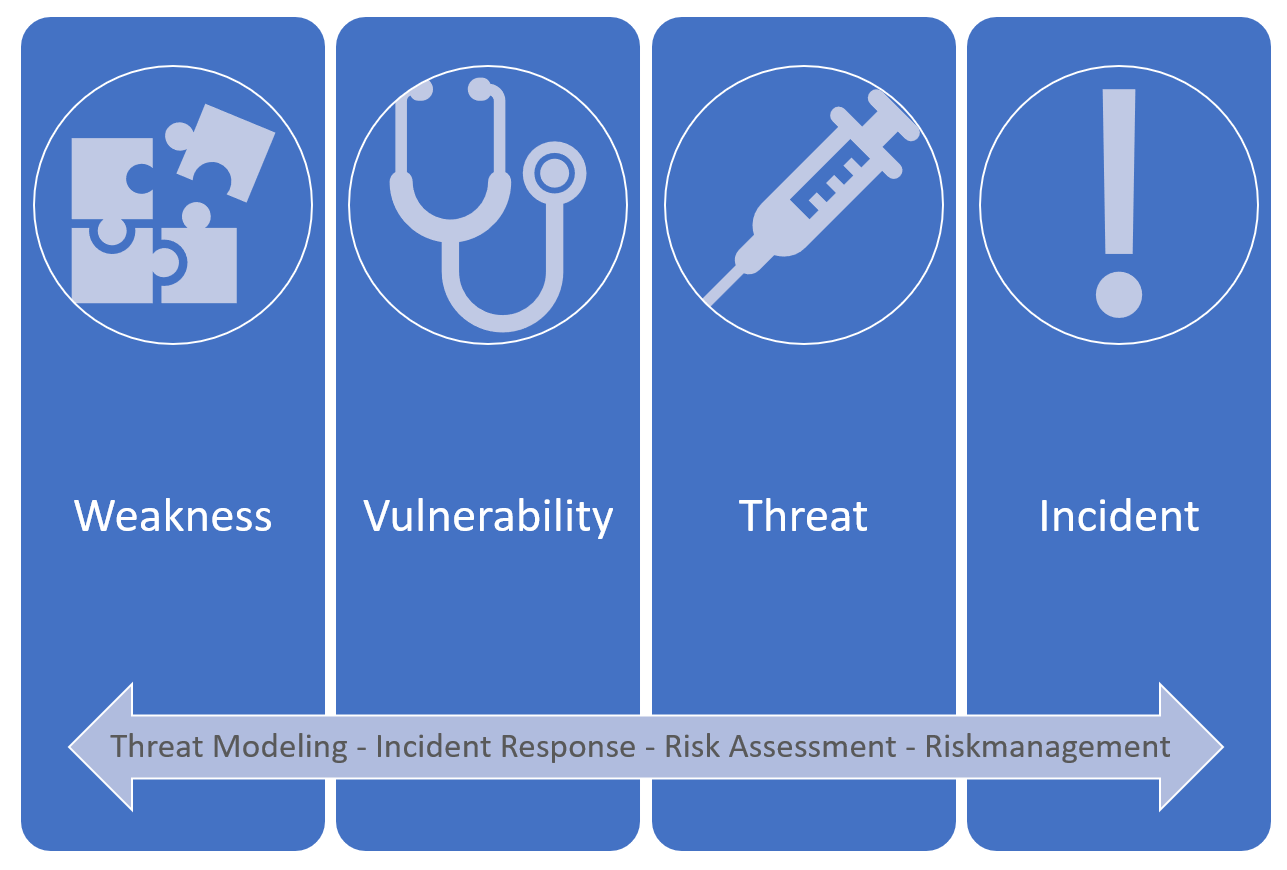
All security efforts stem from our concern about the threat to our integrity. Insecurity means danger. How serious is this threat? How likely is it? Can we recognize it when it emerges? Are we able to correctly assess the potential damage, and what can we do about the threat and the resulting risks? Ensuring security always means recognizing, assessing, and somehow controlling risks.
Standards, Frameworks, and Best Practices:
ISO/IEC 27005: This standard provides guidelines for information security risk management and is an integral part of the ISO/IEC 27001 standard for Information Security Management Systems (ISMS). It helps organizations conduct risk assessments in the context of their information security objectives. More details can be found here.
NIST Risk Management Framework (RMF): The RMF standard from NIST integrates security and privacy risk management into the system development lifecycle. It includes the steps of Prepare, Categorize, Select, Implement, Assess, Authorize, and Monitor. You can learn more here.
All security efforts stem from our concern about the threat to our integrity. Insecurity means danger. How serious is this threat? How likely is it? Can we recognize it when it emerges? Are we able to correctly assess the potential damage, and what can we do about the threat and the resulting risks? Ensuring security always means recognizing, assessing, and somehow controlling risks.
Standards, Frameworks, and Best Practices:
ISO/IEC 27005: This standard provides guidelines for information security risk management and is an integral part of the ISO/IEC 27001 standard for Information Security Management Systems (ISMS). It helps organizations conduct risk assessments in the context of their information security objectives. More details can be found here.
NIST Risk Management Framework (RMF): The RMF standard from NIST integrates security and privacy risk management into the system development lifecycle. It includes the steps of Prepare, Categorize, Select, Implement, Assess, Authorize, and Monitor. You can learn more here.
Why is it important? In today's digital economy, security vulnerabilities can have significant financial and operational impacts. A thorough Cybersecurity Due Diligence Assessment helps companies: - Identify and minimize risks: Early detection of security vulnerabilities that could affect business continuity and reputation. - Preserve and increase value: Ensure that the target company or product meets security standards to protect potential investments. - Ensure regulatory compliance: Ensure that the company complies with relevant legal and regulatory requirements to avoid legal and financial consequences.
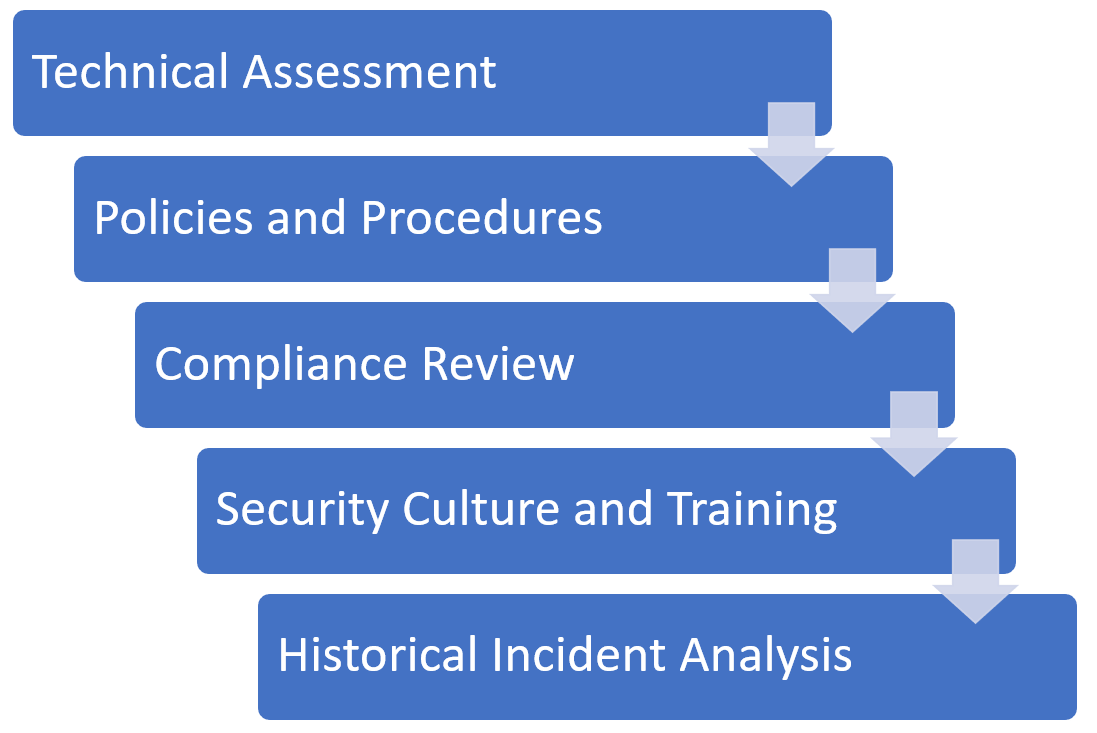
Components of a Cybersecurity Due Diligence Assessment
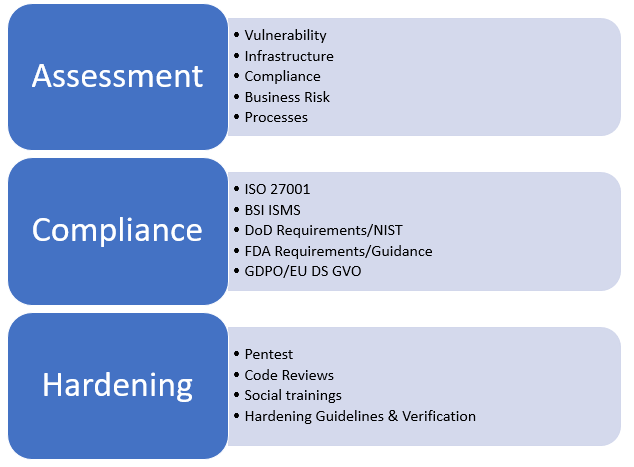
1. Technical Assessment: - Review of network security, including firewalls, Intrusion Detection/Prevention Systems (IDS/IPS), and encryption methods. - Conducting penetration tests and vulnerability analyses. - Evaluation of access management and identity assurance.
2. Policies and Procedures: - Analysis of existing security policies and protocols. - Evaluation of incident response and disaster recovery plans. 3. Compliance Check: - Verification of compliance with standards such as ISO 27001, GDPR, NIST, and industry-specific regulations. 4. Evaluation of Security Culture and Training: - Assessment of training programs to raise employee awareness of cybersecurity. - Analysis of the general security culture within the company. 5. Analysis of Past Security Incidents: Investigation and evaluation of past security incidents and the remedial measures taken.
Benefits for Corporate and Product Development Purchases - Risk Minimization: By identifying security vulnerabilities before the purchase, measures can be taken to fix them and mitigate potential risks. - Informed Decisions: A detailed understanding of the target company's cybersecurity posture allows for more informed purchasing decisions. - Improved Negotiating Power: Knowledge of cybersecurity risks can be advantageous when negotiating the purchase price and contract terms. - Ensuring Business Continuity: Avoidance of disruptions and financial losses due to undetected security vulnerabilities after the acquisition.
Example of a Successful Integration A leading technology company planned to acquire a startup that develops innovative IoT products. Through a thorough Cybersecurity Due Diligence Assessment, they were able to identify significant security vulnerabilities in the startup's IoT platform. These findings led to targeted security improvements before integration, significantly reducing the risk of cyberattacks and securing the long-term success of the acquisition.
Contact Us Are you interested in a Cybersecurity Due Diligence Assessment to secure your next corporate or product development purchases? Contact us today to get a consultation and ensure your investments are protected.
Incident Response Exercises
In today's digital world, cyberattacks are a constant threat to organizations of all sizes and industries. To ensure your team is optimally prepared for such attacks, we offer customized Cybersecurity Incident Response Exercises. These exercises are specifically tailored to the needs of your organization and simulate real attack scenarios. This helps your team practice and refine response strategies to improve overall readiness and resilience.
What we offer:
Planning and Coordination: Our experts plan and coordinate comprehensive Incident Response exercises tailored to your specific requirements and risks. We take into account your existing security policies, infrastructures, and potential threats.
Realistic Scenarios: We simulate a variety of realistic attack scenarios covering different types of cyber threats. These include phishing attacks, ransomware attacks, insider threats, and Advanced Persistent Threats (APTs).
Comprehensive Injects and Techniques: Our exercises include a wide range of injects and techniques to test different aspects of your Incident Response capabilities. This includes technical challenges, communication requirements, and organizational response processes.
Evaluation and Feedback: After each exercise, we provide a comprehensive evaluation and detailed feedback. This includes assessing detection and response speed, the effectiveness of measures, and communication within the team.
Evaluation Criteria:
To evaluate the effectiveness and efficiency of your Incident Response capabilities, we use a structured methodology based on the following criteria:
Detection and Identification: Speed and accuracy in detecting and identifying incidents.
Analysis and Assessment: Thoroughness and correctness of the analysis as well as the documentation of incidents.
Response and Containment: Speed and effectiveness of response and containment measures, as well as internal and external coordination.
Remediation and Recovery: Completeness of remediation, speed of recovery, and verification of measures.
Communication: Effectiveness of internal and external communication, as well as transparency towards stakeholders.
Lessons Learned and Improvements: Gaining insights from incidents and implementing improvement measures to strengthen the security posture.
Compliance with Policies and Protocols: Adherence to internal and external security policies, as well as compliance with legal and regulatory requirements.
Technical Aspects: Use of appropriate tools and technologies, as well as application of technical know-how.
Your Advantage:
Through our customized Incident Response exercises, you improve your organization's responsiveness and resilience to cyber threats. Your team will be able to react faster and more effectively to attacks, mitigate damage, and ensure the continuity of your business operations.
Contact us today to learn more about how our Incident Response exercises can strengthen your security posture.
Testimonial
Cybersecurity Incident Response Exercise at a Railway Control Technology Supplier
RailTech Systems, a leading supplier of control technology for the railway sector specializing in ETCS Level 1 to 3 systems, recently conducted a comprehensive Cybersecurity Incident Response Exercise. The goal was to test the company's response capabilities in the event of a cyberattack and identify vulnerabilities in the IT security architecture.
During the simulation, a targeted attack on the control systems was simulated to assess the defense measures of the internal IT department and its partners. The attack targeted critical systems essential for real-time communication and safe operation of trains.
The exercise demonstrated that the security measures regarding intrusion detection were effective, but some response processes in communication between internal and external teams needed to be optimized. In particular, the protocols for rapid recovery after a cyber incident were revised to significantly reduce response time.
Through this exercise, RailTech Systems was able to significantly improve its ability to detect and respond to cyberattacks. The results led to immediate adjustments to emergency plans and enhanced threat defense measures to ensure the security and operation of their ETCS systems.
Introduction of Cyber Security Standards in Key Industries
We specialize in the implementation of cyber and information security standards in various industries, ensuring that your organization meets the highest security standards and complies with industry regulations.
Semiconductor: - ISO/IEC 27001, an internationally recognized standard for information security management systems (ISMS) that provides a systematic approach to protecting sensitive information. - IEC 62443, an internationally recognized standard that focuses on the cybersecurity of industrial automation and control systems (IACS) and provides best practices for protecting critical infrastructures and industrial facilities. - ISO/IEC 15408, also known as Common Criteria, is an internationally recognized standard for evaluating the security properties of information technology products. The standard provides a framework for assessing and certifying the security properties of IT systems and products to ensure they meet specific security requirements.
Automotive: - ISO/SAE 21434, An international standard that specifies the requirements for cybersecurity management in the automotive industry. It provides guidelines for the entire lifecycle of a vehicle. - ISO 26262, - TISAX (Trusted Information Security Assessment Exchange)
The constantly changing challenges in the IT security field make it almost impossible for IT staff to always stay up-to-date. Zentric closes these service gaps with our consulting and services. Our offerings include:
- Cyber OPFOR Coordination - Data Leakage Prevention - Audit Support/Training - CISO as a Service - Head of Product Security as a Service - Governance Services - Digital/Computer Forensics - Selection and testing of security equipment and software
Excerpt from the Service Packages
Due Diligence
Cybersecurity Due Diligence: What is a Cybersecurity Due Diligence Assessment and how does it work?
In today's digital economy, cybersecurity is essential for business continuity and enterprise value. During acquisitions or investments, a key question is whether the target company's IT landscape and data are truly secure. A Cybersecurity Due Diligence Assessment provides a structured answer.
Testimonial
How a Cybersecurity Due Diligence Assessment protected an acquisition
TechSphere Solutions planned to acquire DataStream Innovations, a startup with a modern cloud platform. To avoid hidden cyber risks, TechSphere launched a complete Cybersecurity Due Diligence Assessment.
The assessment revealed major weaknesses: exposed interfaces, weak segmentation, and unresolved penetration-test findings.
Instead of cancelling the deal, both teams implemented prioritized remediation before integration.
The acquisition closed successfully and the platform entered operations with a significantly stronger security posture.
Core components
A practical due diligence scope includes: threat assessment, attack-surface analysis, vulnerability and penetration testing, and review of code/configuration/governance.
Why it matters It reduces risk, protects deal value, improves compliance confidence, and enables safer post-merger integration.
Conclusion A Cybersecurity Due Diligence Assessment is a critical control in any M&A process. It converts uncertainty into actionable priorities and supports informed investment decisions.
Contact us for a practical, business-focused cybersecurity due diligence engagement.
`r`n
`r`n
NIS-2 & Cyber Resilience Act (CRA)
Implementing regulatory requirements in a structured way — from impact assessment to verifiable compliance evidence.
The NIS-2 Directive and the Cyber Resilience Act (CRA) impose concrete obligations on organizations: risk management, incident reporting, supply chain security, and product security. We accompany you from the first impact assessment to technically and organizationally sound measures that management, IT, and product owners can rely on.
NIS-2 — What organizations must implement now
1. Impact Assessment: Determining whether and to what extent your organization falls under NIS-2 — by sector, size, and criticality.
2. Gap Assessment: Structured comparison of existing security measures against the directive's ten core areas (Art. 21 NIS-2).
3. Risk Management & Governance: Building documentable risk management including management liability, reporting processes, and supply chain security.
4. Incident Reporting: Processes and templates for the 24h initial notification and 72h follow-up notification for significant security incidents.
5. Supply-Chain Security: Assessment and hardening of suppliers and service providers as part of your NIS-2 compliance.
Cyber Resilience Act (CRA) — Requirements for product manufacturers
1. Product Security Assessment: Analysis of security requirements for your product based on CRA categorization (Default, Class I, Class II).
2. Secure Development & SDLC: Integrating Security-by-Design and Security-by-Default into your development process.
3. SBOM & Vulnerability Handling: Creating and maintaining a Software Bill of Materials and building a documented vulnerability management process per CRA requirements.
4. CSAF / Security Advisories: Structured communication of vulnerabilities and security notices to users and authorities.
5. Conformity Evidence: Building technical documentation and the declaration of conformity for CE marking under the CRA.
Why act now?
NIS-2 has been in effect since October 2024. Management liability, fines of up to €10 million, and reporting obligations are active law. The CRA is entering into force in phases — manufacturers, importers, and distributors of products with digital elements must set the course now.
We help you make compliance not a paper exercise, but operational cyber resilience. Since 1999 — proven experts in cybersecurity and regulatory implementation.
Cloud Security Enablement & C5:2026 Readiness
Compliance as a technical outcome – from static documents to automated Security by Design.
Documents do not make a system secure. Documentation is rather the by-product of a well-designed, technical cloud architecture. We anchor regulatory requirements directly as code in your cloud infrastructure – readiness and audit-relevant evidence fall out automatically as a by-product. Instead of generating policy texts that quickly become outdated, we enforce requirements technically and irrevocably and verify every entity end-to-end via toolchain.
Compliance as Code – not as paper
DevSecOps Embedded: Compliance is not dumped on your development teams, but anchored directly in daily development processes.
Continuous Evidence: Away from point-in-time audits – automated, continuous evidence is pulled directly via cloud APIs.
Technical Enforcement: Policy-as-Code enforces requirements technically and irrevocably. Examples: Entra ID Conditional Access (MFA hardening) as well as Azure Policy / AWS Config to block public storage.
Seamless Chain: Every control is backed technologically and delivers audit-relevant evidence without manual effort.
Technical Hardening & C5:2026 Innovations
IAM & Isolation: Tenant isolation, Just-in-Time Access (JIT), and strict MFA enforcement.
Container & Kubernetes: Extended container security, image scanning, and Pod Security Standards.
Cryptography: Key management as a cloud service (KMS/Vault), key rotation, and BYOK.
C5:2026 Innovations: Confidential Computing, post-quantum cryptography, and integration with NIS-2 & DORA.
Our role: Advisor, coach & quality assurance
We act as experts and quality assurers – embedded in your team. We enable your internal staff to implement hardening sustainably and independently.
No MSP, no operations: We do not take over IT operations. This avoids any conflict with existing IT teams or service providers – we work hand in hand.
Our approach in four phases
1. Assessment: C5:2026 gap analysis, current-state capture, shared-responsibility scope, and prioritized roadmap.
2. Enablement: Hands-on workshops on Entra ID, AWS IAM, SIEM (Sentinel), container hardening, and Infrastructure as Code.
3. QA & Audit: Technical reviews of IaC, validation of the evidence chain, and execution of mock audits.
4. RedSight CISO: Central platform for control management, evidence tracking, and management reporting.
100% executable code – from requirement to target platform
RedSight CISO is not a passive GRC tool, but an active knowledge base and pattern library for security engineering with ready-made control packages.
We do not write outdated paper – we enable your IT and service providers to anchor C5:2026 requirements directly as code in your cloud. Continuous Cloud Compliance as measurable value.
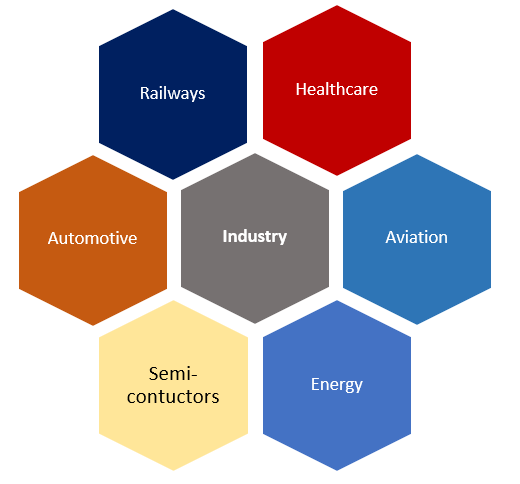
Industries
We operate across industries and national borders. In the event of security-relevant incidents, we are available to support you promptly.
Konzept-Muster
Bei Interesse nutzen Sie bitte unsere Kontaktdaten und geben Sie im Betreff als Stichwort den jeweiligen Titel an. Wir senden Ihnen auch gern gekürzte Musterausgaben zu.
---
Cybersecurity in Civil Aviation
Ensuring Safety in the Air and on the Ground
In the aviation industry, cybersecurity is of growing importance. As aircraft manufacturing and operations become increasingly networked and dependent on digital systems, the potential for cyber threats has dramatically increased. Zentric is dedicated to providing comprehensive cybersecurity concepts and solutions specifically tailored to civil aviation, ensuring both the safety and protection of flights, service organizations, and suppliers at the highest level.
The Importance of Cybersecurity in Civil Aviation Civil aviation faces entirely new cybersecurity challenges due to its dependence on networked systems and the critical nature of its operations. Threats can originate from diverse sources, ranging from state-sponsored actors, criminal organizations, to insider threats. The consequences of a successful cyberattack in this sector can be catastrophic. This can jeopardize the safety of passengers and crew, and have implications for national security, as well as impact economic stability.
Central Focus Areas: Aircraft Systems Security Modern aircraft are equipped with advanced avionics and communication systems that are vulnerable to cyber attacks. Ensuring the security of these systems is critical to prevent unauthorized access and potential sabotage.
Air Traffic Management (ATM) Air traffic control systems are indispensable for managing flight traffic. Protecting these systems from cyber threats ensures safe and efficient flight operations and prevents disruptions.
Airport and Airfield Infrastructure Airports are complex environments with numerous networked systems, including baggage handling, security controls, and passenger information systems. Securing these systems is important to ensure smooth airport operations and protect sensitive data.
Flight Schools and Training Facilities Flight schools and training facilities use simulators and other digital tools that can be targets of cyber threats. Protecting these systems ensures that pilot training is safe and uninterrupted.
Suppliers and Accessory Suppliers Suppliers of aircraft components and accessories are an integral part of the aviation ecosystem. Ensuring their cybersecurity is critical to prevent supply chain attacks that could compromise the safety and performance of aircraft.
Standards and Regulations Compliance with international standards and regulations is a cornerstone of effective cybersecurity in civil aviation.
DO-326A/ED-202A This standard provides guidelines for ensuring the cybersecurity of aircraft systems throughout their entire lifecycle, from development and implementation through operation and maintenance.
DO-356A/ED-203A These documents establish the technical requirements to protect aircraft systems from cyber threats.
DO-355A/ED-204A This standard, which focuses on protecting avionics systems, provides guidelines for identifying and mitigating potential vulnerabilities.
ISO/IEC 27001 An internationally recognized standard for Information Security Management Systems (ISMS) that provides a systematic approach to managing sensitive business information.
Swiss Requirements from the Federal Office of Civil Aviation The Swiss ICT Minimum Standard defines essential requirements for cybersecurity measures in Switzerland. This standard is particularly relevant for organizations operating in Switzerland or collaborating with Swiss partners, ensuring compliance with national regulations.
Zentric's Cybersecurity Services and Solutions for Civil Aviation
Risk Assessment and Management
We conduct all necessary cybersecurity risk assessments to identify risks from vulnerabilities in your systems. We help you develop strategies to mitigate risks and support you in creating SBOMs (Software Bill of Materials) according to country-specific requirements.
Training and Awareness
We offer specialized training programs for aviation personnel to improve their understanding of cybersecurity threats and best practices. Our awareness campaigns promote a security culture within your organization.
Incident Response Exercises
To ensure adequate response readiness, Zentric plans, organizes, and conducts incident response exercises tailored to your needs and those of civil aviation. Such exercises simulate real-world attack scenarios and help your team practice and refine their response strategies. This proactive approach improves overall readiness and resilience against potential cyber threats. Zentric uses its own DryRun exercise platform for this purpose.
Incident Response Planning
Our experts help you prepare for potential cybersecurity incidents (Incident Response) by developing response plans together with you. These plans ensure a quick and effective response and minimize the impact of security breaches.
Digital Forensics
In the event of a cybersecurity incident, our digital forensics team is prepared to investigate and analyze such incidents. This allows attacks to be understood and ideally prevented in the future.
Regulatory Compliance Support
Navigating the complex landscape of cybersecurity regulations in aviation can be challenging. Zentric provides expert advice to ensure that your organization meets all relevant standards and regulatory requirements.
Conclusion In the rapidly evolving field of civil aviation, maintaining robust cybersecurity measures is essential to ensure both safety and operational integrity. Zentric's comprehensive cybersecurity service and solutions provide the necessary protection against emerging threats. This includes flight schools, accessory suppliers, and all stakeholders in the aviation industry.
For more information on how Zentric can support your cybersecurity needs in civil aviation, contact us today.
---
Cybersecurity in the Medical Industry
Safety for Patients
As medical devices and systems become increasingly networked and dependent on digital technologies, the potential for cyber threats has increased. Zentric is dedicated to providing comprehensive cybersecurity solutions and procedures specifically tailored to the healthcare sector to ensure both patient safety and the protection of sensitive health data.
The Importance of Cybersecurity in Healthcare
Healthcare faces a novel challenge: cybersecurity. The networking of medical devices and information systems, both internally and externally with partners and cloud services, has created new dependencies. All of this happens in an environment where sensitive information is predominantly processed.
This is not only about personal data but also about the integrity of information that can form the basis for future treatments.
But who threatens this information or the processes that depend on it?
This can be anyone and anything: simple criminals, state-sponsored actors, insiders, or so-called script kiddies who just want to try things out without being aware of the possible consequences.
The damage is not changed by this. The motivation of the attacker is irrelevant once data has been lost or altered. This has a direct impact on patient care. It is justified to speak of potential catastrophes here.
Standards and Frameworks
Since these dangers are known to authorities, frameworks and requirements have been defined in most countries that must be met in the healthcare sector. These affect laboratories, hospitals, and medical device manufacturers. Anyone working in this field must comply with these rules.
Central Focus Areas:
Security of Medical Products and Diagnostic Devices: Modern medical devices and diagnostic systems are usually equipped with advanced digital technologies and are therefore vulnerable to cyber attacks. These risks must be addressed throughout the entire lifecycle of a medical product. This begins with design, actual development and coding, through testing, verification and validation, to delivery, operation and eventually decommissioning/disposal of the product.
Hospital Infrastructure: Hospitals are complex environments with numerous networked systems, including electronic patient records, imaging systems, and administrative software. Securing these systems is essential to ensure smooth hospital operations and protect sensitive patient data. This already begins in planning and procurement. Here, appropriate requirements must be defined not only for functionality and user-friendliness but also security requirements for the systems to be acquired.
Pharmaceutical Manufacturers: Pharmaceutical companies are targets for cyber attacks due to the high value of their intellectual property and clinical data. Due to the complex and sometimes lengthy production processes, they are also susceptible to sabotage. Protecting this information and these systems is not only important for securing research and development processes but also for the profitability of business processes and not least for the protection of employees and patients.
Zentric's Cybersecurity Services and Solutions for the Healthcare Industry
Risk Assessment and Management
We conduct all necessary cybersecurity risk assessments to identify risks from vulnerabilities in your systems. We help you develop strategies to mitigate risks and support you in creating SBOMs (Software Bill of Materials) according to regulatory requirements (FDA).
Training and Awareness
We offer specialized training programs for healthcare personnel, development, management, and service staff. This improves their understanding of cybersecurity threats. Our awareness campaigns promote a security culture within your organization.
Incident Response Exercises
To ensure adequate response readiness, Zentric plans, organizes, and conducts incident response exercises tailored to your needs and those of the healthcare sector. Such exercises simulate real-world attack scenarios and help your team practice and refine their response strategies. This very proactive approach improves overall readiness and resilience against potential cyber threats. Zentric uses its own DryRun exercise platform for this purpose.
Incident Response Planning
Our experts help you prepare for potential cybersecurity incidents (Incident Response) by developing response plans together with you. These plans ensure quick and effective response and minimize the impact of security breaches.
Digital Forensics
In the event of a cybersecurity incident, our digital forensics team is prepared to investigate and analyze such incidents. This allows attacks to be understood and ideally prevented in the future.
Regulatory Compliance Support
Navigating the complex landscape of healthcare cybersecurity regulations can be challenging. Zentric provides expert advice to ensure that your organization meets all relevant standards and regulatory requirements.
Pre- and Post-Market Security Assessments
We support pharmaceutical manufacturers and diagnostic device manufacturers in conducting security assessments both before and after market launch to ensure product security and compliance.
Development and Implementation of Security Concepts
Zentric helps create and implement security concepts, policies, standards, and procedures to ensure your organization is comprehensively protected.
DevSecOps
We support your teams in implementing DevSecOps practices to integrate security aspects throughout the entire development and operations cycle, ensuring continuous security.
In the rapidly evolving healthcare sector, maintaining robust cybersecurity measures is essential to ensure the safety of patients, healthcare staff, and the integrity of operational processes. Zentric's comprehensive cybersecurity solutions provide the necessary protection against emerging threats and ensure that all areas of the healthcare sector remain secure.
For more information on how Zentric can support your cybersecurity needs in healthcare, contact us today.
---
Cybersecurity in the Railway Sector
Ensuring Safety on the Rails
In the railway industry, cybersecurity is of critical importance. With the increasing digitalization and networking of railway systems, the potential for cyber threats is increasing exponentially. Zentric is dedicated to providing comprehensive cybersecurity solutions specifically tailored to the needs of the railway sector to ensure both safety and protection of railway systems at the highest level.
The Importance of Cybersecurity in the Railway Sector The railway sector faces unique cybersecurity challenges due to the complexity and networking of its systems. We are also talking about autonomous driving here and the novel threats that arise from it. These can stem from various sources, including state-sponsored actors, criminal organizations, as well as insider threats. The consequences of a successful cyber attack in this sector can be catastrophic, endangering passenger safety and compromising the operational integrity of railway systems.
Central Focus Areas:
Security of ETCS and Signal Technology The European Train Protection and Warning System (ETCS), beacons, and RBCs (Radio Block Centers) are critical components of modern railway systems. Their security is essential to prevent unauthorized access and potential sabotage.
Infrastructure of Railway Stations and Routes Railway stations and route infrastructure comprise numerous networked systems, including signal systems, communication systems, and power supply. Securing these systems is essential to ensure smooth railway operations and protect sensitive data.
Suppliers and Technology Providers Suppliers of railway components and technologies are an integral part of the railway ecosystem. Their cybersecurity is critical to prevent supply chain attacks that could compromise the security and performance of railway systems.
Zentric's Cybersecurity Services and Solutions for the Railway Sector
Risk Assessment and Management
We conduct all necessary cybersecurity risk assessments to identify risks from vulnerabilities in your systems. We help you develop risk mitigation strategies and support you in creating SBOMs (Software Bill of Materials) according to country-specific regulatory requirements.
Training and Awareness
We offer specialized training programs for energy sector employees, development, management, and service personnel to improve their understanding of cybersecurity threats and best practices. Our awareness campaigns promote a security culture within your organization.
Incident Response Exercises
To ensure adequate response readiness, Zentric plans, organizes, and conducts incident response exercises tailored to your needs and those of energy sector operations. Such exercises simulate real-world attack scenarios and help your team practice and refine their response strategies. This very proactive approach improves overall readiness and resilience against potential cyber threats. Zentric uses its own Redsight DryRun exercise platform for this purpose.
Incident Response Planning
Our experts help you prepare for potential cybersecurity incidents (Incident Response) by developing response plans together with you. These plans ensure quick and effective response and minimize the impact of security breaches.
Digital Forensics
In the event of a cybersecurity incident, our digital forensics team is prepared to investigate and analyze such incidents. This allows attacks to be understood and ideally prevented in the future.
Regulatory Compliance Support
Navigating the complex landscape of energy sector cybersecurity regulations can be challenging. Zentric provides expert advice to ensure that your organization meets all relevant standards and regulatory requirements.
Conclusion In the rapidly evolving energy sector, maintaining robust cybersecurity measures is essential to ensure both supply security and operational integrity. Zentric's comprehensive cybersecurity solutions provide the necessary protection against emerging threats and ensure that energy systems remain secure.
For more information on how Zentric can support your cybersecurity needs in the energy sector, contact us today.
___
Cybersecurity in the Energy Sector
Protecting Critical Infrastructure
The energy sector is a critical infrastructure whose digital security is of strategic importance. With the increasing digitalization and interconnection of energy supply systems, the potential for cyber threats is growing exponentially. Zentric is dedicated to providing comprehensive cybersecurity solutions specifically tailored to the needs of the energy sector, ensuring both supply security and the protection of energy systems at the highest level.
The Importance of Cybersecurity in the Energy Sector The energy sector faces unique cybersecurity challenges due to the criticality and interconnectedness of its systems. From power grids to gas supply to renewable energy sources – all systems are increasingly digitally networked and therefore vulnerable to cyberattacks. These threats can originate from various sources, including state-sponsored actors, criminal organizations, and insider threats. The consequences of a successful cyberattack can be catastrophic, affecting the energy supply of millions of people.
Central Focus Areas:
Security of Power Grids and SCADA Systems Modern power grids and SCADA systems (Supervisory Control and Data Acquisition) are the backbone of energy supply. Their security is critical to preventing unauthorized access and potential sabotage.
Infrastructure of Power Plants and Distribution Stations Power plants and distribution stations comprise numerous interconnected systems for the generation, transmission, and distribution of energy. Securing these systems is essential to ensure stable and safe energy operations.
Suppliers and Technology Partners Suppliers of energy components and technologies are an integral part of the energy ecosystem. Their cybersecurity is critical to preventing supply chain attacks that could compromise the security and performance of energy systems.
Zentric's Cybersecurity Services and Solutions for the Energy Sector
Risk Assessment and Management
We conduct all necessary cybersecurity risk assessments to identify risks from vulnerabilities in your systems. We help you develop risk mitigation strategies and support you in creating SBOMs (Software Bill of Materials) according to country-specific regulatory requirements.
Training and Awareness
We offer specialized training programs for railway sector employees, development, management, and service personnel to improve their understanding of cybersecurity threats and best practices. Our awareness campaigns promote a security culture within your organization.
Incident Response Exercises
To ensure adequate response readiness, Zentric plans, organizes, and conducts incident response exercises tailored to your needs and those of railway sector operations. Such exercises simulate real-world attack scenarios and help your team practice and refine their response strategies. This very proactive approach improves overall readiness and resilience against potential cyber threats. Zentric uses its own Redsight DryRun exercise platform for this purpose.
Incident Response Planning
Our experts help you prepare for potential cybersecurity incidents (Incident Response) by developing response plans together with you. These plans ensure quick and effective response and minimize the impact of security breaches.
Digital Forensics
In the event of a cybersecurity incident, our digital forensics team is prepared to investigate and analyze such incidents. This allows attacks to be understood and ideally prevented in the future.
Regulatory Compliance Support
Navigating the complex landscape of railway sector cybersecurity regulations can be challenging. Zentric provides expert advice to ensure that your organization meets all relevant standards and regulatory requirements.
Conclusion In the rapidly evolving railway sector, maintaining robust cybersecurity measures is essential to ensure both passenger safety and operational integrity. Zentric's comprehensive cybersecurity solutions provide the necessary protection against emerging threats and ensure that railway systems remain secure.
For more information on how Zentric can support your cybersecurity needs in the railway sector, contact us today.
___
Cybersecurity in the Financial Sector
Protecting Assets and Data
The financial sector is a primary target for cybercriminals and state-sponsored actors. With the increasing digitalization of financial services and the rise of FinTechs, the potential for cyber threats continues to grow. Zentric is dedicated to providing comprehensive cybersecurity solutions specifically tailored to the needs of the financial sector, protecting assets, data, and trust at the highest level.
The Importance of Cybersecurity in the Financial Sector The financial sector faces unique cybersecurity challenges due to the high value of financial information and the global interconnectedness of financial institutions. Threats can originate from various sources, including professional cybercriminals, state-sponsored actors, criminal organizations, and insiders. The consequences of a successful cyberattack can be catastrophic, resulting in significant financial losses, loss of trust, and regulatory consequences.
Central Focus Areas:
Security of Banking Systems and Payment Platforms Modern banking systems and payment platforms are at the heart of the financial industry. Their security is critical to preventing unauthorized access, fraud, and the theft of assets.
Infrastructure of Credit Institutions and FinTechs Credit institutions and FinTech companies operate numerous interconnected systems for account management, lending, and capital investment. Securing these systems is essential to protect customer data and comply with regulatory requirements.
Suppliers and Technology Partners Suppliers of financial technologies and services are an integral part of the financial ecosystem. Their cybersecurity is critical to preventing supply chain attacks that could compromise the security and integrity of financial institutions.
Zentric's Cybersecurity Services and Solutions for the Financial Sector
Risk Assessment and Management
We conduct all necessary cybersecurity risk assessments to identify risks from vulnerabilities in your systems. We help you develop risk mitigation strategies and support you in creating SBOMs (Software Bill of Materials) according to country-specific regulatory requirements.
Training and Awareness
We offer specialized training programs for financial sector employees, development, management, and service personnel to improve their understanding of cybersecurity threats and best practices. Our awareness campaigns promote a security culture within your organization.
Incident Response Exercises
To ensure adequate response readiness, Zentric plans, organizes, and conducts incident response exercises tailored to your needs and those of the financial sector. Such exercises simulate real-world attack scenarios and help your team practice and refine their response strategies. This very proactive approach improves overall readiness and resilience against potential cyber threats. Zentric uses its own Redsight DryRun exercise platform for this purpose.
Incident Response Planning
Our experts help you prepare for potential cybersecurity incidents (Incident Response) by developing response plans together with you. These plans ensure quick and effective response and minimize the impact of security breaches.
Digital Forensics
In the event of a cybersecurity incident, our digital forensics team is prepared to investigate and analyze such incidents. This allows attacks to be understood and ideally prevented in the future.
Regulatory Compliance Support
Navigating the complex landscape of financial sector cybersecurity regulations can be challenging. Zentric provides expert advice to ensure that your organization meets all relevant standards and regulatory requirements.
Conclusion In the rapidly evolving financial sector, maintaining robust cybersecurity measures is essential to ensure the protection of assets, data, and trust. Zentric's comprehensive cybersecurity solutions provide the necessary protection against emerging threats and ensure that financial systems remain secure.
For more information on how Zentric can support your cybersecurity needs in the financial sector, contact us today.
___
Training/Workshops
We offer training on essential topics in cyber and information security. Attend our seminars or inquire about possible in-house training sessions.
Short Presentations
The Incident DryRun (45 minutes)
Zero Trust Security (45 minutes)
The History of the "Computer Virus" (45 minutes)
Social Engineering (45 minutes)
Thinking Security (45 minutes)
Cybersecurity and Civil Aviation (60 minutes)
Cybersecurity Due Diligence Assessment (60 minutes)
Currently Requested Training
GDPR for the CIO
Cyber Security Incident Training
Additional Training Opportunities
Tools and Methods for IT Infrastructure Hardening (1 day)
CISO - An Introduction (0.5 days)
CISO - Architecture Workshop (1 day)
Cyber Security Vulnerability Handling (1 day)
Cyber Security Risk Management (2 days)
Pentest Properly Organized (0.5 days)
Pentest - A Case Study (0.5 days)
IoT Cyber Security Concepts (1 day)
Cyber Security Awareness Training (2 days, industry-specific for on-site)
Preface If you do not want your current IP address to be stored by us or by software library providers connected to our services, please leave this page or avoid using internet browsers, mail clients, or similar internet tools. Entering a web address (DNS name), even before opening our or any other website, may transmit your IP address to DNS servers, routers, and search engines, where it can be stored temporarily.
1. Name and Contact Details of the Data Protection Officer The role of a Data Protection Officer is not mandatory at Zentric. Your contact person is Mr. Chris Ditze-Stephan.
2. Collection and Storage of Personal Data and Purpose of Processing a) Visiting the Website When visiting our website www.zentric.*, your browser automatically sends information to our web server. This information is stored temporarily in log files. The following data may be recorded:
- IP address of the requesting device - Date and time of access - Referrer page (where available) - Name and URL of the requested page - Browser type and version, operating system, and provider DNS name (where available)
These data are processed for secure operation of the HTTPS protocol, system stability and security analysis, and administrative purposes such as blocking malicious IP addresses when needed. The legal basis is Article 6(1) GDPR. We do not use this data to draw direct conclusions about your identity.
b) Contact Form Usage If you contact us using our contact form, your name and email address or phone number are required so we can respond. Additional data are optional. Processing for this purpose is based on Article 6(1) GDPR and your voluntary consent.
c) Storage and Processing of Form Data Personal data collected through the contact form are stored in our SecureManager system (Threatmanager Cloud) to enable organized and timely processing of your request. Retention is limited to a maximum of 90 days after your request has been answered; data are then deleted automatically. You may request earlier deletion at any time. A confirmation email may be sent via Gmail SMTP.
3. Data Sharing Your personal data from the contact form are not transferred to third parties for purposes other than those listed in this policy. Data are processed only for internal handling of your request, within our SecureManager system, and for confirmation emails via Gmail. SecureManager is hosted in Germany. Gmail processing follows Google Privacy Policies: https://policies.google.com/privacy
4. Cookies Our site may use cookies indirectly through integrated libraries. Cookies may contain information related to the device in use. Most browsers accept cookies automatically; however, you can configure your browser to block cookies or notify you before new cookies are created. Full cookie deactivation may reduce website functionality.
7. Rights of Data Subjects You have the right to access, rectification, erasure, restriction of processing, data portability, withdrawal of consent, and to lodge a complaint with a supervisory authority in accordance with Articles 15, 16, 17, 18, 20, 7(3), and 77 GDPR.
8. Right to Object Under Article 21 GDPR, you may object to processing based on legitimate interests for reasons arising from your particular situation. You may object to direct marketing at any time without specific justification.
9. Data Security We use TLS with the highest encryption level supported by your browser (typically 256-bit). If unsupported, 128-bit v3 technology may be used. Our technical and organizational security measures are continuously improved.
11. Twitter Our website may embed Twitter content and functions. Twitter privacy details: https://twitter.com/privacy
12. Google CDN We use Google CDN for jQuery to improve performance. This may involve transmission of technical data to Google systems, including possible processing in the USA.
13. Updates to this Privacy Policy This Privacy Policy is valid as of January 2026. It may be updated as our services evolve or as legal and regulatory requirements change.
Insecurity means: "The worst possible damage that can occur if your worst enemy had control of [your]computer." Thinking Security, S.M. Bellovin
Contact Information
Privacy Policy
0. Preamble
If you do not want your current IP address to be stored here or through other software library suppliers connected with us, please leave this page or refrain from using Internet web browsers, mail clients, or other Internet tools. By simply entering a web address (DNS name), before visiting our and any other website, your IP address is communicated to DNS servers, routers, and possibly search engines, and is stored and managed at least temporarily.
1. Name and Contact Details of the Data Protection Officer
The role of a Data Protection Officer is not mandatory at Zentric. Your contact person is Mr. Chris Ditze-Stephan.
2. Collection and Storage of Personal Data and the Type and Purpose of Its Use a) When Visiting the Website
When you visit our website, information is automatically sent to our website server by your browser. This information is temporarily stored in a so-called logfile. The following information is collected without your involvement and stored until automatic deletion:
IP address of the requesting computer
Date and time of access
The website from which access originated
Name and URL of the requested page
Web browser used and possibly the operating system of your computer as well as the DNS name of your Internet service provider
The data mentioned is processed as follows: required for the functioning of the https protocol, evaluation for system security and stability as needed, and for administrative purposes, for example: to block attacker IP addresses in the event of attacks. The legal basis for data processing is Article 6(1) GDPR. In no case do we use the logged data for the purpose of drawing conclusions about your person.
b) Use of Contact Form
If you submit inquiries through our contact form, name and email address or phone number are required for an appropriate response from us. All other information can be provided additionally and optionally. Data processing for the purpose of contacting us is carried out in accordance with Article 6(1) GDPR based on your voluntarily provided consent. The personal data we collect through the use of the contact form is stored and processed as follows:
c) Storage and Processing of Form Data
Your contact request is stored in our SecureManager System (Threatmanager Cloud) to enable organized management and prompt processing of your request. This storage also serves to document and track customer interactions. The storage period is a maximum of 90 days after your request is answered, after which the data is automatically deleted. You may also request deletion at any time earlier. Additionally, you will receive a confirmation email via our email system (Gmail SMTP). The legal basis for this processing is Article 6(1) GDPR (your consent).
3. Data Sharing
The transmission of your personal data from the contact form to third parties for purposes other than those listed below does not take place. Your data is processed exclusively for the internal processing of your inquiry and in our SecureManager System as well as for sending confirmation emails via Gmail. SecureManager is a data protection management system based in Germany. Gmail is subject to Google's privacy policies: https://policies.google.com/privacy
4. Cookies
We use cookies indirectly on our site through libraries used. Information can be stored in a cookie that relates to the specifically used device. Most browsers accept cookies automatically. However, you can configure your browser so that no cookies are stored on your computer or a notice always appears before a new cookie is created.
7. Data Subject Rights
You have the right at any time to access (Art. 15 GDPR), rectification (Art. 16 GDPR), erasure (Art. 17 GDPR), restriction of processing (Art. 18 GDPR), data portability (Art. 20 GDPR), revocation of your consent (Art. 7(3) GDPR), and to lodge a complaint with a supervisory authority (Art. 77 GDPR).
8. Right to Object
If your personal data is processed on the basis of legitimate interests, you have the right to object to the processing. If you would like to exercise your right of revocation or objection, simply send an email to datenschutzbeauftragter@zentric.de.
9. Datensicherheit
Wir verwenden innerhalb des Website-Besuchs das TLS-Verfahren in Verbindung mit der jeweils höchsten Verschlüsselungsstufe, die von Ihrem Browser unterstützt wird. Wir bedienen uns geeigneter technischer und organisatorischer Sicherheitsmaßnahmen, um Ihre Daten gegen zufällige oder vorsätzliche Manipulationen zu schützen.
10. Cloudflare
Mit unserer Website werden teilweise auch Elemente von Cloudflare, ein CDN (Content Delivery Network) der Cloudflare Inc. mit Sitz in den USA verarbeitet. Cloudflare verwendet sog. "Cookies" und speichert Daten in- und außerhalb der Europäischen Union. Nach Auskunft von CloudFlare werden die zwischengespeicherten Daten grundsätzlich innerhalb von 4 Stunden, spätestens jedoch nach einer Woche, gelöscht. Weitere Informationen: https://www.cloudflare.com/security-policy
11. Twitter
Innerhalb unseres Onlineangebotes können Funktionen und Inhalte des Dienstes Twitter eingebunden werden. Twitter ist unter dem Privacy-Shield-Abkommen zertifiziert. Datenschutzerklärung: https://twitter.com/de/privacy
12. Google
Wir benutzen die Javascript-Bibliothek jQuery. Um die Ladegeschwindigkeit unserer Website zu erhöhen, verwenden wir das CDN (content delivery network) von Google um diese Bibliothek zu laden.
13. Aktualität und Änderung dieser Datenschutzerklärung
Diese Datenschutzerklärung ist aktuell gültig und hat den Stand Mai 2018. Durch die Weiterentwicklung unserer Website kann es notwendig werden, diese Datenschutzerklärung zu ändern.
Contact Request
We are happy to get in touch and discuss how Zentric can support your requirements.
Quick Contact
Please share your contact details and how we can reach you.